Buyer’s guideUpdated Oct 17, 2026
Fabric shaver for couch: how to pick one that works
Why sweater shavers stall on upholstery, what a fabric shaver for a couch needs (duty rating, blade, power), how to shave one, and which fabrics to skip.
In this guide
- What couch pilling is, and why it isn't wear
- Do fabric shavers work on couches?
- Why a sweater shaver stalls on a sofa
- What to look for in a fabric shaver for a couch
- How to use a fabric shaver on a couch
- What a fabric shaver fixes on cat scratches, and what it doesn't
- Pills, lint, or pet hair? Pick the right tool
- Frequently asked questions
Look at the arm of the couch where everyone sits. That is where the fuzz balls show up first, then the seat beside it, then the patch on the back where heads rest. You may have already tried the little round shaver made for sweaters and watched it quit halfway through one cushion. Couch and upholstery pilling needs a different tool: a heavy-duty fabric shaver for a couch, designed to handle stronger fabrics, rather than one designed to be gentle on delicate fabrics like cashmere.
What couch pilling is, and why it isn't wear
Sitting rubs the fabric, and every rub works a little fiber loose from the surface. Loose ends on the face of the weave are "subject to friction, which causes them to twist together into small balls" (Vision Fabrics).
None of this hurts the couch. The Association for Contract Textiles says pilling and fuzzing "do not impact the durability or functionality of the material" (ACT). Pindler, an upholstery fabric house, tells customers that pilling "is not a fabric defect or fault," and that it "is easily removable."
Which couch pills worst comes down to fiber. Cotton and wool are comparatively weak, so their pills "tend to break off more easily," while polyester and acrylic "are strong, anchoring pills more firmly to the surface" (Fiber-Seal). Blends are the hardest case, because the weaker fiber breaks and the stronger one "holds the pills to the cloth" (Pindler). Much family-room upholstery is polyester or a blend, and Fiber-Seal notes that couch pilling is especially noticeable on synthetics.
Real wear looks different. Abrasion, "the surface wear of a fabric caused by friction" in the ACT definition, goes through the cloth. Pale backing threads along the front edge of a seat, or a hand-sized patch gone flat and shiny, are the usual signs the fabric is thinning, and no shaver helps there; shaving makes a thin spot thinner, so the job is reupholstery or a slipcover. Pindler reassures customers that pilling does not mean "the fabric is wearing away and disintegrating," because a pill sits on the face of the cloth with the weave intact underneath, and anything on the face of the cloth can be cut off.
Do fabric shavers work on couches?
Yes, if the shaver was built for furniture. A fabric shaver removes pilling from most woven and knit upholstery, but the small ones sold for sweaters stall on a dense weave and quit before a cushion is done. A unit built for furniture differs in duty rating, blade and power; a lint roller handles surface lint and pet hair.
A fabric shaver is a small powered blade that trims whatever stands above the surface of a cloth, and the upholstery trade recommends one without hedging. Pindler calls a pill shaver the "quickest and most cost effective approach," and Woolmark, the wool industry's certification body, calls fabric shavers "very effective at removing pills."
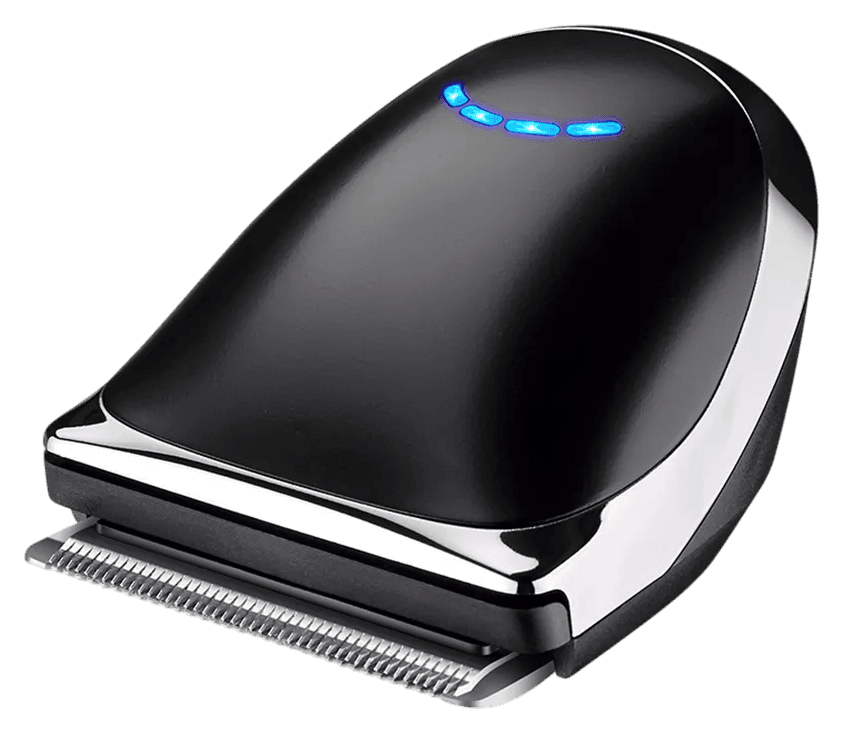
Whether a shaver works on a couch depends on which shaver. The typical fabric shaver is a sweater shaver: a small rotary blade behind a mesh screen, designed to be safe on delicate knits, with a lint cup the size of a thimble and a battery. Run across a cushion it does take pills off, a patch at a time, until the cup fills or the charge fades. The Original Couch Shaver was built for the other job. It is heavy duty, with an oscillating, hair-clipper-style blade on a guard and the power for a dense upholstery weave; it runs corded or cordless, so it never stops mid-cushion; and the cut pills stay on the fabric to be brushed off, so there is no hopper to stop and empty.
Either way, the job shrinks each time, because every shave takes loose fiber with it; pilling "will diminish and eventually cease once the excess fibers are removed," in Pindler's words. The shaver that quit halfway through your cushion was built for a sweater, and a sofa asks more of it than a sweater ever did.
Why a sweater shaver stalls on a sofa
The shaver most people already own was designed for a cardigan, and every choice in it follows from that. The rotary head behind its mesh screen is tuned to skim a merino sleeve without biting it, and a sleeve never needed a heavier blade, a big cup, or a cord.
Contract upholstery for high-traffic public seating is specified to survive 30,000 double rubs on the Wyzenbeek abrasion test (ACT); residential sofa fabric is built on the same logic and tends to be far denser than a sweater. A rotary head tuned for knits bogs down in that density while the mesh packs with fiber. Even a shaver Better Homes & Gardens' testers liked for furniture came with the caveat that "the lint trap fills up quickly" and that the vibration "becomes increasingly uncomfortable during bigger jobs" (Better Homes & Gardens).
Built for upholstery means the opposite choices: a heavy-duty, hair-clipper-style blade that oscillates on a guard instead of a rotary blade behind mesh, and a cord in the box so the job ends when the couch is done. The Couch Shaver is that shaver, built for furniture rather than knits.
What to look for in a fabric shaver for a couch
Use a fabric shaver rated for upholstery, the kind sold as a furniture fabric shaver. Search "best fabric shaver for couch" and the results are mostly sweater shavers, so read a listing for three things: duty rating, blade and power.
Duty rating is the seller's phrase, and heavy duty and for upholstery appear on plenty of sweater shavers; a listing sold as a heavy duty fabric shaver for couch or furniture use may hold a shaver designed to be safe on delicate knits. The words do not settle it.
The blade does, and a listing cannot fake it in the photos. A rotary blade behind a mesh screen is a knit shaver whatever the title says; it lifts a few fibers at a time through small holes and stalls once they pack. An oscillating, hair-clipper-style blade on a guard sweeps across the surface and cuts whatever stands above it, which is what a dense upholstery weave needs.
Power is where an electric fabric shaver for a couch earns the word. A battery-only shaver has whatever charge it had when you picked it up and stops when it runs out, often mid-cushion. A corded-or-cordless one stays plugged in until the last arm is done.
| Attribute | A sweater shaver | The Couch Shaver |
|---|---|---|
| Duty rating | Designed to be safe on delicate knits | Heavy duty, built for upholstery |
| Blade | Rotary blade behind a mesh screen | Oscillating, hair-clipper-style blade on a guard |
| Power | Battery only; stops when the charge does | Corded or cordless; never stops mid-cushion |
The Couch Shaver sits in the right column, and the result is a cushion that looks even again because the blade shaves the pills, not the weave. Because the blade sweeps rather than grabs, a second pass is as safe as the first.
How to use a fabric shaver on a couch
To remove pilling from a couch with the Couch Shaver, the order matters as much as the technique; the full instructions cover the device itself. Work from top to bottom with light pressure, and keep the blade clear of cut fiber so it keeps cutting cleanly instead of snagging.
Brush off loose fuzz, pet hair, and crumbs
Use your hands, a lint roller, a brush, or a handheld vacuum over the cushions, the seams and the crevice behind the seats. Crumbs and loose fiber clog any blade and hide the pills you are after. The surface should feel fuzzy under a palm, with no grit.
Start with the removable cushions, laid flat
Pull the seat and back cushions off and lay them on a table. Flat and taut makes a clean pass, because slack fabric bunches ahead of the blade.
Shave with light pressure, slowly, with the weave
Pull the fabric taut ahead of the blade with your off hand and press just enough that the blade slides beneath the pills. Go slowly. Going with the weave, the way you would brush velvet, is the safer habit.
Brush the loose pills off between passes
Switch the unit off, brush the cut pills off the fabric and sweep the lint out of the blade, since a blade packed with fiber stops cutting cleanly.
Move to the back, the arms and the seams
Fixed upholstery cannot be laid flat, so your off hand does that work. Pull the fabric taut over the curve of an arm and along welted seams, and work around buttons and piping rather than across them.
Brush out the blade after every session
Switch off, unplug and sweep the blade area clear with the brush, so the next session starts with a clean blade. The care instructions cover the rest.
Each session carries off the fiber it cut, so the next one is lighter and further off. Re-shave when the arm everyone leans on starts to show fuzz again.
What a fabric shaver fixes on cat scratches, and what it doesn't
The arm the cat works has its own kind of fuzz. A claw hooks a loop of the weave and pulls it clear of the surface, and the fibers around it fray into a halo. A shaver cuts the loose, pulled fibers so the area reads smooth again. It cannot push a pulled loop back into the weave or close a hole, and the fur on the cushion beside it is a lint roller's job.
The arm will keep getting attention, because the advice from the ASPCA is to "teach her where and what to scratch" instead of stopping her, so the fuzz comes back until a post goes next to the arm. On a tightly woven cloth, Sailrite notes, "no loops mean claws can't easily snag the fabric"; texture gives them a hold.
Pills, lint, or pet hair? Pick the right tool
| Problem | What it looks like | The right tool |
|---|---|---|
| Pilling | Fuzz balls anchored to the surface; they roll under a thumb but stay put | Couch Shaver |
| Surface lint | Loose fibers and dust sitting on top, lifted by a fingertip | Lint roller or vacuum |
| Pet hair | Hairs caught in the weave, in drifts where the animal sleeps | Lint roller, rubber brush or vacuum; a shaver will not lift it |
| Cat-scratch fuzz | Pulled loops with a halo of frayed fiber | Couch Shaver for the loose fiber; the pulled loop stays |
| Fabric worn to the backing | Thin, shiny patches where the base threads show through | Reupholstery or a slipcover |
Frequently asked questions
Do fabric shavers work on couches?
Yes, on most woven and knit upholstery, as long as the shaver was built for furniture. Pills are loose fiber twisted into balls by friction, and a shaver cuts them off at the surface. Leather, suede, vinyl and loose weaves need a different tool.
What is the best fabric shaver for a couch?
Look past heavy duty in the title and check the blade in the photos. A rotary head behind a mesh screen is a sweater shaver. For a sofa you want an oscillating, hair-clipper-style blade on a guard, built heavy duty for upholstery, plus a cord in the box. The Couch Shaver is built that way.
What is the best way to remove pilling from a couch?
The Couch Shaver, run in slow passes over fabric held taut, is the fastest way we know. Vacuum, test the back of a cushion, do the loose cushions flat on a table, then the back and arms with the fabric pulled taut, one to two passes each. Light pressure is enough; the full instructions cover the blade.
What is the difference between a fabric shaver and a lint remover?
A fabric shaver cuts, and a lint remover lifts. A pill is fiber still rooted in the cloth, so it has to be sheared off. Surface lint and pet hair only rest on top, where a sticky sheet or rubber brush picks them up; a shaver pointed at pet hair mostly moves it around.
Can you use a fabric shaver on cashmere or wool?
Not the Couch Shaver. Cashmere, angora and mohair are too delicate for a heavy-duty blade, which can take the fiber along with the pill; for those, use a traditional sweater shaver, the small rotary head designed to be safe on delicate knits. Wool upholstery is the exception: Woolmark, the wool industry's own certification body, recommends fabric shavers for pilled wool, so test a hidden spot with the Couch Shaver and go ahead.
Is pilling a sign of a bad couch?
No, and the trade says so in its own guidelines. Upholstery mills treat pilling as cosmetic, and the performance standards say it does not affect how long the fabric lasts. What it does tell you is the fiber: polyester and blends hold their pills tightly, while cotton and wool let them break away.
Where can you buy a fabric shaver for a couch?
The Couch Shaver is sold on Amazon. Whatever you order for a sofa, look past the words heavy duty in the title and check the blade in the photos. Check the fabric too; leather, suede and vinyl need a different tool.